
Emerald Ash Borer in Minnesota: Should You Treat or Remove Your Ash Tree?
Emerald ash borer has spread across Minnesota, leaving homeowners to decide whether to treat or remove their ash trees. This guide breaks down the signs of EAB infestation and provides a practical framework for making the right decision for your property.
Emerald Ash Borer in Minnesota: What Homeowners Need to Know
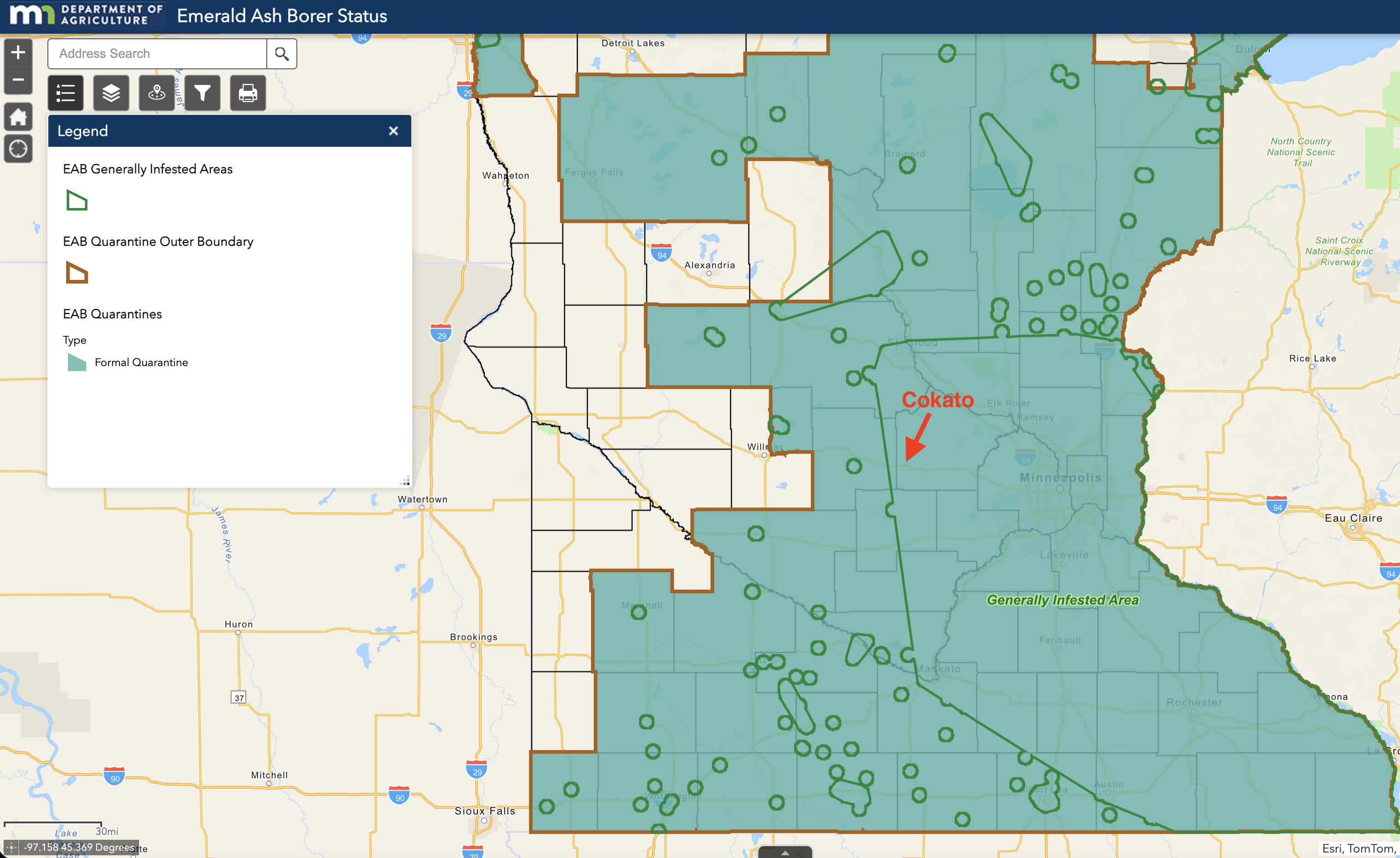
The emerald ash borer (EAB) has now been confirmed in 59 Minnesota counties, according to the Minnesota Department of Agriculture, and its reach continues to grow. If you have an ash tree on your property, you're likely facing a decision that thousands of Minnesota homeowners have already confronted: should you invest in ongoing treatment, or is removal the smarter move?
There's no one-size-fits-all answer. This guide walks through what you actually need to know to make the right call for your property.
What Is the Emerald Ash Borer?
The emerald ash borer is an invasive beetle native to Asia, first discovered in Minnesota in 2009. Adult beetles are small and metallic green — about half an inch long — but the damage is done by the larvae. EAB larvae tunnel through the inner bark of ash trees, disrupting the tree's ability to transport water and nutrients. Over two to four years, untreated ash trees almost always die.
Minnesota is particularly vulnerable. The state has roughly one billion ash trees — more than any other state in the nation — which means the impact on our urban and rural canopy will be significant over the coming decades.
Signs of EAB Infestation
EAB is notoriously difficult to detect early. By the time most homeowners notice something is wrong, the infestation is usually three to five years in. Here's what to watch for:
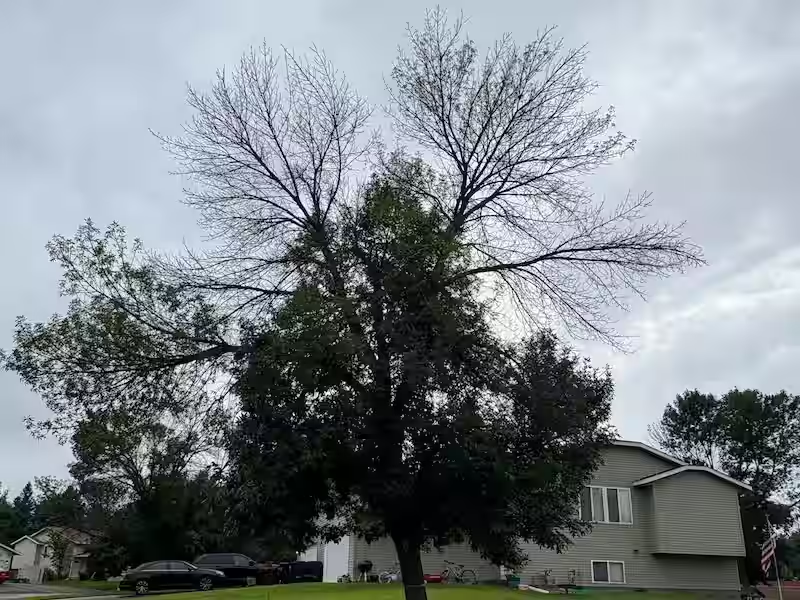
- Canopy dieback from the top down. EAB damage typically starts at the top of the tree and works its way down. Look for thinning or bare branches in the upper third of the canopy.
- D-shaped exit holes. Adult beetles emerge through distinctive D-shaped holes in the bark, roughly 1/8 inch across. Perfectly round holes are usually a different pest.
- Woodpecker "flecking." Woodpeckers feed on EAB larvae and chip away the outer bark in the process, leaving patches of light-colored inner bark exposed. This is often the most visible sign during winter.
- S-shaped galleries under the bark. If you peel back loose bark, EAB larvae leave winding, S-shaped tunnels packed with sawdust-like frass.
- Epicormic sprouting. Stressed ash trees often push out new shoots from the base of the trunk or along major limbs.
- Vertical bark splitting, sometimes revealing the galleries underneath.
Treatment vs. Removal: A Decision Framework
This is the question most homeowners are actually trying to answer. Here's a practical framework.
When Treatment Makes Sense
Treatment is typically the right call when:
- The tree is healthy. A good candidate has at least 70% of its canopy intact. Trees with more significant decline rarely recover, even with treatment.
- The tree is in a valued location. Mature ash that provide shade, screen a property, or anchor a landscape often deliver more value in place than a newly planted replacement would for decades.
- The tree is structurally sound. No major cracks, cavities, or leaning that would make it a hazard regardless of EAB.
- You're prepared for the commitment. Professional trunk injections last about two to three years, so plan to budget for recurring treatments over the life of the tree.
The most effective treatment is a trunk injection of emamectin benzoate, a restricted-use insecticide that only licensed professional arborists can apply. It's delivered directly into the tree's vascular system, which is both more effective and more environmentally responsible than sprays or soil drenches. Products sold at garden centers often rely on neonicotinoids, which can harm bees and other pollinators.
Treatment cost typically ranges from $250 to $400+ per application, depending on tree size, with treatments repeated every two to three years.
When Removal Is the Better Investment
Removal often makes more sense when:
- The tree has already lost 30% or more of its canopy. At that point, treatment is unlikely to save it.
- You see clear active EAB symptoms — exit holes, heavy woodpecker flecking, significant dieback.
- The tree has structural issues — major cavities, cracks, leaning, or poor location (over a house, near power lines, etc.).
- You have multiple ash trees and treating all of them isn't realistic. Strategic removal and replanting with diverse species is often the better long-term play.
The Cost Math
A rough long-term comparison for a mid-sized ash tree:
- Treatment path: $250–$400 every 2–3 years for the life of the tree. Over 20 years, that's roughly $2,500–$4,000+ in recurring costs — not counting price increases or eventual removal when the tree does decline.
- Removal and replant: A one-time removal cost (typically $1000–$2,500+ depending on size and access), plus $200–$800 for a new tree installed. Done.
For homeowners with multiple ash trees, the math often favors removal and replanting with a diverse mix of species, which also contributes to a healthier, more resilient urban forest.
Dead Ash Become Dangerous Fast
Whichever direction you choose, timing matters. Once an ash tree dies, the wood dries out and becomes brittle surprisingly quickly. Branches snap without warning, and entire trees can fail in wind events that a healthy tree would shrug off.
This is why many arborists won't climb a dead ash — it's unsafe. Dead ash removal usually requires more equipment, more labor, and costs more than removing the same tree while it was still alive. Making the treat-or-remove decision early, before the tree is in decline, gives you more options and lower costs.
How TreeTec Approaches EAB
At TreeTec, EAB evaluations are handled by an ISA Certified Arborist with hands-on experience in EAB trunk injection treatment. That matters because the treat-or-remove decision isn't a checklist — it's a judgment call that depends on the tree's specific health, structure, location, and the realistic economics of treatment.
When we come out, we'll give you a straight read: whether your tree is a good candidate for treatment, whether it's far enough gone that removal is the smarter play, and what the realistic costs look like either way. No pressure, no upsell — if treatment isn't the right call, we'll tell you.
If removal is the right path, our crew handles ash removal safely and efficiently, including the hazardous dead ash trees that other companies won't tackle.
Not sure whether to treat or remove your ash tree? Contact TreeTec for an honest assessment and a clear recommendation.

Resources:

ISA Certified Arborist and TreeTec’s Sales Manager, Eric combines field and utility experience with a practical, honest approach to helping homeowners make the right tree care decisions.

